
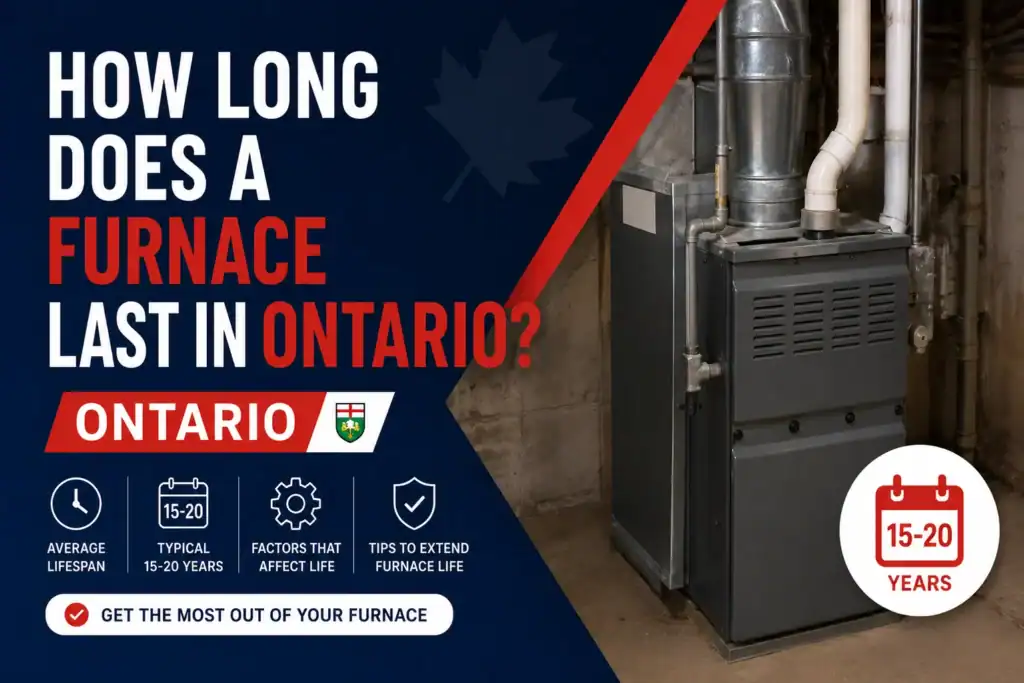
rs, while neglected furnaces may need replacement after only 10 to 15 years.
The lifespan depends on Furnace maintenance, Furnace Installation quality, furnace type ,furnace brand ,usage, and Ontario’s climate that we will explain more.
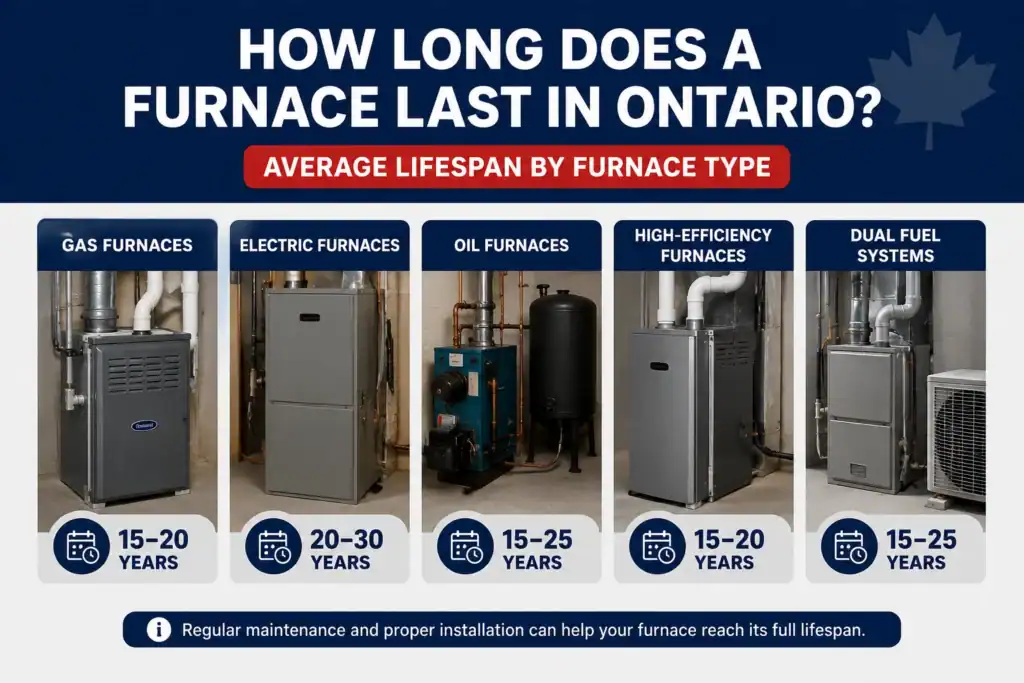
Furnace Lifespan by Type
| Furnace Type | Average Lifespan |
|---|---|
| Gas Furnace | 15–20 Years |
| High-Efficiency Furnace | 15–20 Years |
| Oil Furnace | 15–25 Years |
| Electric Furnace | 20–30 Years |
tips: If your furnace is over 15 years old, requires frequent repairs, or causes rising energy bills, it may be time to start planning for replacement.
Gas Furnaces
Gas furnaces remain the most common heating system in Ontario. Most models last between 15 and 20 years when maintained properly.
Electric Furnaces
Electric furnaces often reach 20 to 30 years because they contain fewer moving parts and do not rely on combustion.
Oil Furnaces
Oil furnaces generally last between 15 and 25 years, although maintenance requirements are usually higher than gas systems.
High-Efficiency Furnaces
Modern high-efficiency furnaces provide lower energy costs but still typically fall within the 15 to 20-year lifespan range.
Furnace Lifespan by Brand
Although maintenance matters more than brand, homeowners often compare furnace manufacturers when planning a replacement.
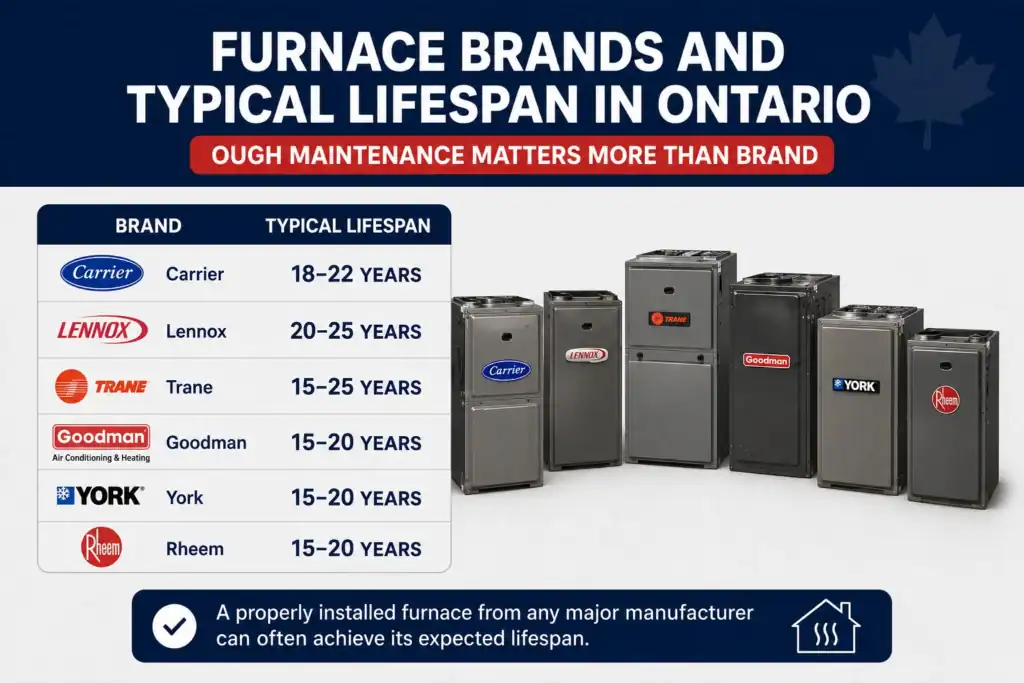
| Brand | Typical Lifespan |
|---|---|
| Carrier | 18–22 Years |
| Lennox | 20–25 Years |
| Trane | 15–25 Years |
| Goodman | 15–20 Years |
| York | 15–20 Years |
| Rheem | 15–20 Years |
A properly installed furnace from any major manufacturer can often achieve its expected lifespan.
How Ontario’s Climate Impacts Furnace Longevity
Ontario winters are one of the biggest factors affecting furnace lifespan.
In cities such as Toronto, Ottawa, Mississauga, Hamilton, and London, furnaces often run continuously during cold weather. The longer a furnace operates, the more wear it places on motors, burners, ignition systems, and electrical components.
Homes with poor insulation can place even more strain on a heating system because the furnace must run longer cycles to maintain indoor temperatures.
Key Factors That Affect Furnace Lifespan
Several factors influence how long a furnace lasts:
- Annual maintenance
- Filter replacement frequency
- Furnace Installation quality
- • Furnace sizing
- • Indoor air quality
- • Usage patterns
- • Ductwork condition
One of the most overlooked factors is proper sizing. An oversized furnace frequently short cycles, while an undersized furnace runs excessively. Both situations can shorten equipment life.
The Heat Exchanger: The Most Important Component
The heat exchanger is often the component that determines whether an older furnace should be repaired or replaced.
Its job is to transfer heat while keeping combustion gases separated from household air. If the heat exchanger develops cracks, replacement is often recommended because of safety concerns.
Most heat exchangers can last 20 to 25 years when maintained correctly. Dirty filters and airflow restrictions are among the leading causes of premature failure.
How Maintenance Extends the Life of Your Furnace
Routine maintenance is the most effective way to maximize furnace lifespan.
Annual service appointments help technicians:
- Clean internal components
- Test safety systems
- Check airflow
- Inspect electrical connections
- Identify worn parts before they fail
Something as simple as changing an air filter every one to three months can significantly reduce stress on the blower motor and improve efficiency.
Signs Your Furnace Is Nearing the End of Its Life
Aging furnaces often show warning signs before they fail completely.
Common indicators include:
- Frequent repairs
- Rising utility bills
- Uneven heating
- Strange noises
- Excessive dust
- Short cycling
- Difficulty maintaining temperature
If several of these symptoms appear together, replacement may be more cost-effective than continued repairs.
Common Problems in Older Furnaces
As furnaces age, component failures become more common.
Typical issues include:
- Blower motor failure
- Igniter problems
- Control board failure
- Draft inducer motor issues
- Flame sensor problems
- Heat exchanger deterioration
These repairs can become increasingly expensive as replacement parts become harder to find.
How to Determine the Age of Your Furnace
To find your furnace age:
1. Locate the manufacturer label.
2. Find the serial number.
3. Check the manufacturer’s date code.
4. Review installation records if available.
Many homeowners are surprised to learn their furnace is older than they thought.
Repair vs Replace: Making the Right Decision
This is one of the most important questions for homeowners.
Repairing makes sense when:
• The furnace is under 10–12 years old.
• Repair costs are relatively low.
• Overall system performance remains good.
Replacement is usually the better option when:
• The furnace is over 15 years old.
• Major components fail.
• Repair costs continue increasing.
• Energy efficiency has declined significantly.
Furnace Age Guide
Furnace Age Recommendation
0–10 Years Maintain and repair
10–15 Years Monitor performance
15–20 Years Begin planning replacement
20+ Years Replacement is often recommended
How Furnace Efficiency Changes With Age
Even if an older furnace still works, efficiency often declines.
Many older systems operate at approximately 70–80% AFUE. Modern high-efficiency furnaces frequently achieve 95–98% AFUE.
This means a larger percentage of the fuel you pay for becomes usable heat rather than being lost through the venting system.
Energy Costs of an Aging Furnace
Older furnaces typically consume more energy.
Reasons include:
• Reduced heat transfer
• Worn components
• Airflow restrictions
• Longer operating cycles
Many homeowners notice increasing heating bills years before the furnace actually stops working.
How to Make Your Furnace Last Longer
To maximize furnace life:
• Change filters regularly.
• Schedule annual maintenance.
• Keep supply and return vents open.
• Improve home insulation.
• Seal air leaks.
• Address repairs quickly.
• Install a programmable thermostat.
These simple habits can add years to the life of a heating system.
Furnace Replacement Cost in Ontario
As of 2026, furnace replacement costs in Ontario typically range from:
Furnace Type Typical Installed Cost (CAD)
Standard Gas Furnace $4,500–$6,500
High-Efficiency Furnace $5,500–$9,500
Premium Variable-Speed Furnace $8,000–$12,000+
Costs vary depending on home size, furnace capacity, efficiency rating, venting requirements, and installation complexity.
High-Efficiency Furnaces: Do They Last Longer?
Not necessarily.
High-efficiency furnaces generally provide lower energy bills and improved comfort, but their lifespan remains similar to standard furnaces.
The biggest benefit is reduced operating costs rather than a dramatically longer lifespan.
Heat Pump vs Furnace: Is It Time to Upgrade?
Many Ontario homeowners are considering heat pumps because of energy savings and rebate programs.
Heat pumps can lower operating costs and provide both heating and cooling. However, furnaces remain highly effective during Ontario winters, particularly during extreme cold temperatures.
Best Time of Year to Replace a Furnace in Ontario
The best time for replacement is usually spring or fall.
Benefits include:
• Better scheduling availability
• Potential promotions
• More time to compare quotes
• Reduced risk of emergency replacement
Waiting until winter often results in higher stress and fewer options.
Conclusion
For most homeowners, how long does a furnace last in Ontario comes down to maintenance, installation quality, and usage. While the average lifespan is 15 to 20 years, many systems can last longer with proper care. Monitoring repair costs, energy bills, and overall performance helps determine when replacement makes financial sense. If your furnace is approaching the 15-year mark, now is a good time to start planning ahead and exploring high-efficiency replacement options before an unexpected winter breakdown occurs.